


Run every field job through one service lifecycle, from the first request to back-office follow-up.
Logistics and field service teams win or lose in the handoffs. Work passes from demand to scheduling and assignment. It then moves to field work and back-office completion.
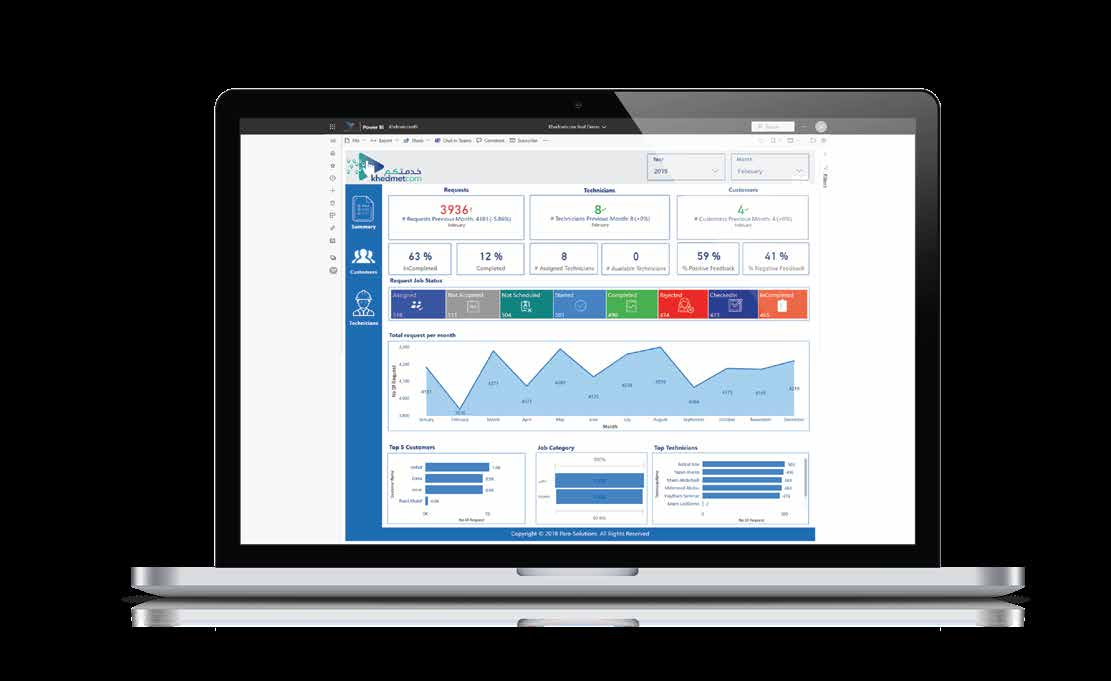
Para's KhedmetCom / FSM product anchors our work in this industry. It helps teams dispatch and schedule more efficiently and make better use of technicians. It supports first-time fixes and field productivity. It also shows the revenue context of each job and cuts admin work after the job ends.
Para can connect the product to your other enterprise systems when a job needs data from them.
Field service improves when the dispatcher, the technician, and the back office all see the same job.

Why this matters
Field service teams often juggle schedules and paperwork across different tools or by hand.
A scheduling screen alone does not fix that. Each job must carry the right context into the field. The result must then flow back to the office without rework.
KhedmetCom / FSM runs service execution. Para's integration and analytics skills connect it to the wider enterprise.
This gives a clear offer to any business that relies on field teams spread across many sites.
- Service-demand and work-request capture.
- Planning the work and assigning the right technician.
- Visibility into dispatch and field work.
- Service history and context that help teams assign the right person and fix the job the first time.
- Closing the job and finishing the paperwork.
- Reports that show how well the operation is performing.
Field Service Lifecycle
Demand / Work Request
Plan & Schedule
Dispatch & Assign
Field Execution
Completion & Back Office
Service Insight
What the work looks like
Map the end-to-end service lifecycle
Para maps how demand enters the operation and who plans the work. We trace how teams make assignments and what the field worker needs. We also map what happens after the job ends.
This shows which handoffs the product should handle. It also shows which ones need links to other enterprise systems.
Define scheduling and assignment context
The operating model defines what dispatchers need to know to pick the right person, such as skills or location.
The goal is smarter dispatch without loading the product with needless complexity.
Put useful context into the field experience
Technicians need enough information to understand the job and what to do. They should not have to call the office for every decision.
So mobile and field screens should fit the real task at hand.
Close the loop with the back office
Completion details must flow back to the teams that handle billing and follow-up.
This closes the gap between work done in the field and work still waiting in the office.
Use service data to improve the operation
Once the lifecycle connects, managers can track demand and spot repeat visits.
Reporting becomes a tool for improving operations, not a separate analytics project.
Para point of view
Service process before scheduling features
The workflow from demand to completion should drive how you set up the product.
The technician needs context, not just a task
Better service depends on giving the field worker the information needed to finish the job.
First-time fixes begin before the visit
Good preparation decides whether the right person arrives with the right information.
Back-office effort is part of field service cost
Plan the paperwork that follows a job in the same lifecycle as the field work itself.
Use operational data to improve
Service status and history can help managers spot repeat bottlenecks and capacity issues.
What you get
Service lifecycle assessment
How work flows today, from the first request to the back office.
KhedmetCom / FSM scope
What the product will cover for your teams and how it will assign work.
Integration design
Links to your other systems where needed.
Field experience requirements
The information and actions technicians need to do the job.
Operational reporting model
Key measures and management views across the service lifecycle.
Rollout and support plan
What it takes to roll the product out and support it.
Where it fits
Logistics & Field Services is the entry point for KhedmetCom / FSM and the Para skills around it.
KhedmetCom / FSM
The core product for planning and running field work.
Customer Service
Service request capture and status updates for customers where needed.
B2B Applications
Partner or subcontractor workflows when field work crosses company lines.
Modern Apps & Integration
Links to the business systems you already use.
Data, BI & Reporting
Service and workforce views that managers can act on.
Explore related capabilities
Related advisory
- Service Process Advisory
- Enterprise Architecture & Roadmapping
- Integration Advisory
- Operational Resilience
Related solutions
Related platforms & assets
- Field-service lifecycle patterns
- Integration patterns
- Service reporting patterns
Need to connect your field team with the planning and back-office work around it?
Talk to Para about how your field work runs today. We can start with one field process and design how KhedmetCom / FSM fits around it.